
Industrial & Structural
Structural steel rust removal and recoating
Steel rust removal and recoating means stripping corrosion back to sound metal, then rebuilding the protection with a primer and topcoat system chosen for the environment. Most Valuable Painters does this work on structural, architectural and plant steel across Metro Vancouver and the Fraser Valley. Site assessment and written quote are free.
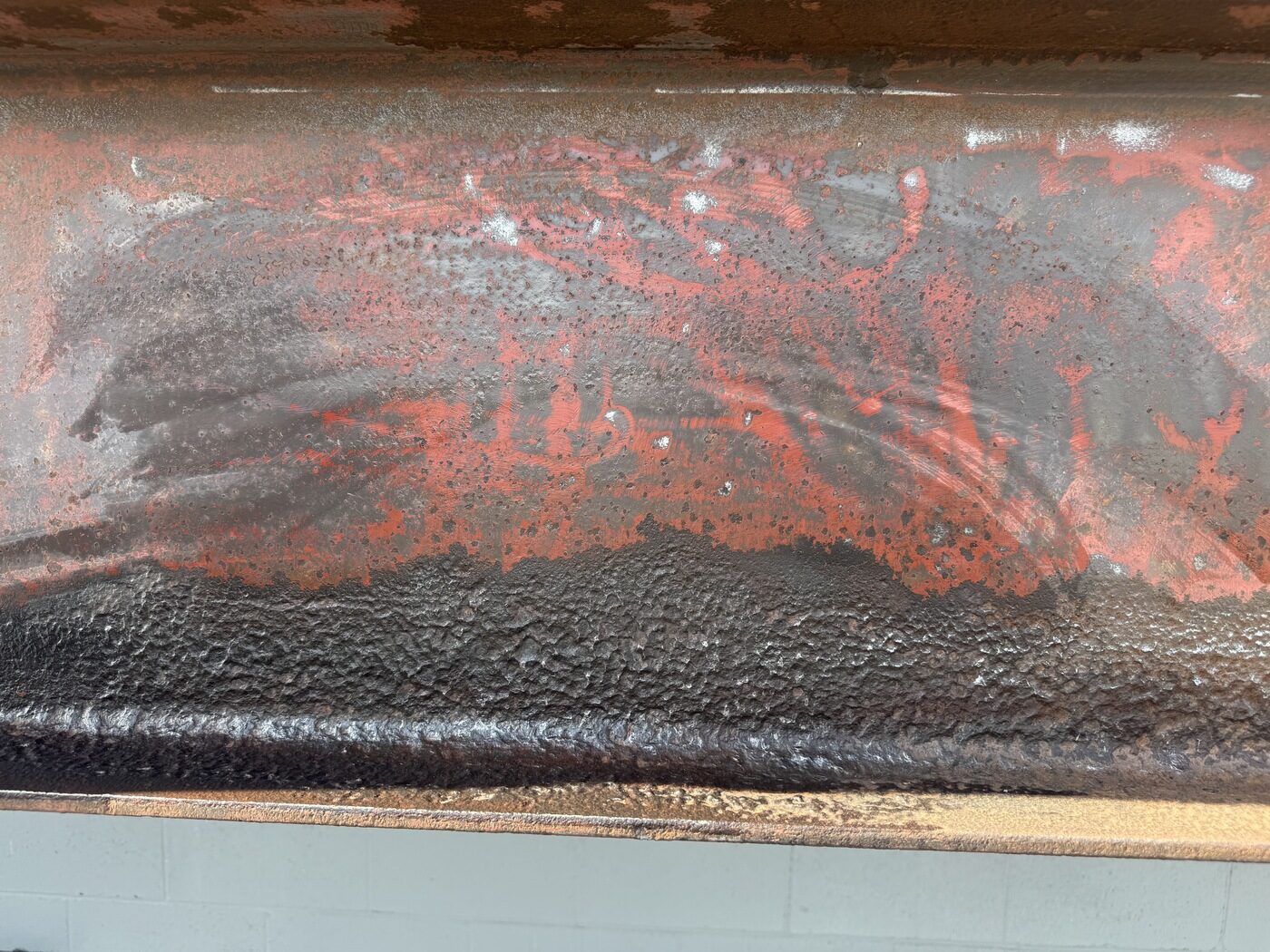
Painting over rust does not stop rust
Corrosion does not stay under a coat of paint — it keeps going, and it lifts the new coating off from underneath. That is why a cheap recoat on rusted steel usually looks worse after eighteen months than it did before. The only thing that actually stops the reaction is removing the corrosion product and the failed coating, then sealing the clean surface.
The scale of this is genuinely large. The NACE International IMPACT study (2016) put the global cost of corrosion at roughly US$2.5 trillion a year — about 3.4% of global GDP — and estimated that 15% to 35% of that could be saved by applying corrosion-control practices that already exist. On a single building, that is the difference between maintaining steel on a schedule and replacing members you did not have to replace.
Surface preparation is the part that decides the outcome
Coating manufacturers write their warranties against a preparation grade, not against a brand of paint. The grades come from the SSPC/NACE joint standards, now published by AMPP, and they are specific about how much of the surface has to be clean:
- SP 2 — Hand Tool Cleaning. Scrapers and wire brushes. Removes loose material only.
- SP 3 — Power Tool Cleaning. Needle guns, grinders, powered wire brushes.
- SP 6 / NACE No. 3 — Commercial Blast. At least two-thirds of every unit area free of all visible residues.
- SP 10 / NACE No. 2 — Near-White Metal. At least 95% of every unit area clean. The common specification for aggressive environments.
- SP 5 / NACE No. 1 — White Metal. 100% clean. Immersion and chemical exposure.
Which grade a job needs is decided by the coating system and the exposure, not by how much time is left in the day. It belongs in the written quote before anyone starts — and it is the first thing we will tell you when we walk the site.
Matching the system to the environment, not to a catalogue
Exposure is classified internationally under ISO 12944, which grades atmospheric corrosivity from C1 (heated interiors) up to C5 and CX (coastal, industrial and offshore). It matters here: the Lower Mainland is wet, mild and near salt water, so exterior structural steel in this region sits considerably higher on that scale than the same steel would inland. A system specified for a dry prairie warehouse is not the right system for a Fraser Valley plant, and a food-processing or washdown environment adds chemical exposure on top of the weather.
In practice that means we talk about the building before we talk about product: what is in the air, how often it gets washed down, whether it is heated, and how long you need the system to last before the next maintenance cycle.
How we work on site
- 1
Assessment
We walk the steel with you, look at how the existing coating is failing, and identify what has to come off. Free, and you get a written scope.
- 2
Containment and access
Lifts, staging and containment go in first. On occupied sites we schedule around your operation — most of our industrial work runs evenings, early mornings and weekends.
- 3
Removal
Corrosion and failed coating come off to the specified grade. Crews work in full PPE including respirators; abrasive blasting in BC is regulated work under WorkSafeBC.
- 4
Prime and inspect
Prepared steel is primed inside the manufacturer's recoat window. Where the job calls for it, we stop for inspection before the topcoat goes on.
- 5
Topcoat
The finish system goes on at the specified film build, and we walk it with you before we pull off site.
A recent job: a 70-foot support beam at a food-processing plant
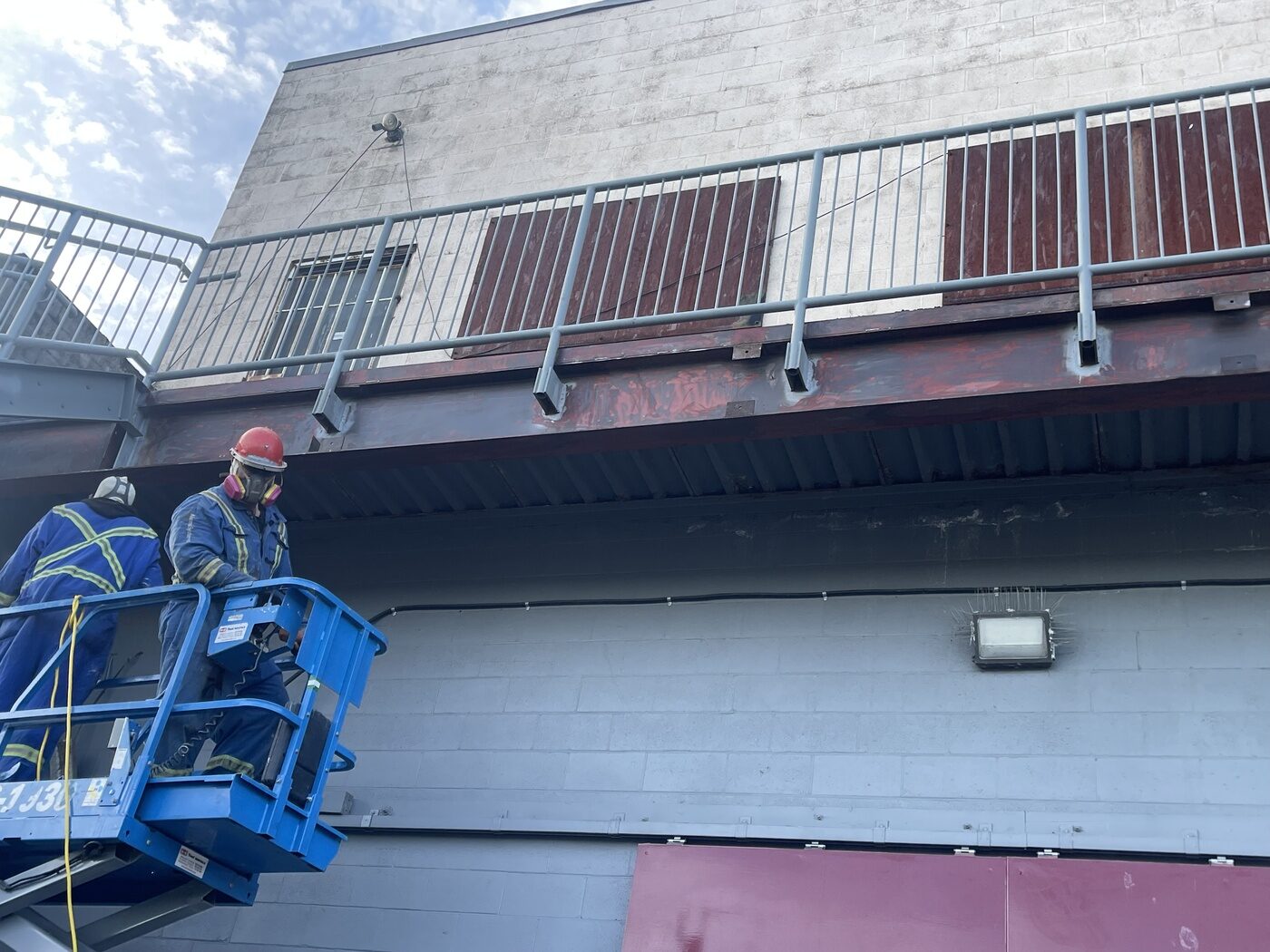
Through spring and early summer 2026 we worked a run of structural steel at a food-processing facility — a 70-foot support I-beam plus railings and supports beneath a walkway. The existing primer had failed and the steel underneath was pitted. The crew worked from a scissor lift in full PPE, took the corrosion back to sound metal, and prepped and primed the run for inspection. The topcoat is the next stage.
We are showing this one mid-prep rather than as a finished before-and-after because the topcoat is not on yet, and we do not publish a "recoated" claim before the recoat exists. The photographs on this page and on the main gallery are all from that job and the mass-timber ceiling stain we ran in July.
What we need from you to quote it
Nobody can price steel work over the phone. What speeds it up: roughly how much steel is involved, how high it is and what access exists, whether the site stays operational while we work, and whether there is an existing coating specification we have to meet. If you have photographs of the worst area, send them — they usually tell us more than a description does.
Get the steel looked at
Free site assessment, written scope, and a date. Seven days a week, 7:00am – 7:00pm.
Steel recoating questions
Can rusted steel be saved, or does it have to be replaced?
In most cases it can be saved. Surface and moderate pitting corrosion is a coatings problem, not a structural one, and removing it and recoating restores the protection. Replacement becomes the conversation when section loss is severe enough to affect capacity — and that is a call for a structural engineer, not for us. If we see something that looks like it, we will tell you to get it assessed before we quote coating work on it.
Do you have to blast, or can you use hand and power tools?
It depends on the coating system and the exposure. Hand and power tool cleaning is legitimate preparation for some maintenance situations and is far easier to run on an occupied site. Abrasive blasting is what you need when the specification calls for a commercial or near-white grade. We will tell you which one the job actually requires rather than defaulting to whichever is cheaper for us.
Can you work while the plant stays running?
Usually yes, with containment and scheduling. Most of our commercial and industrial work runs evenings, early mornings and weekends so operations are not interrupted. We are available seven days a week, 7:00am to 7:00pm. Access and containment get planned before the first day, not improvised on it.
How long does a recoated steel system last?
It depends almost entirely on the preparation grade and the exposure, which is why both belong in the quote. A system specified and prepared correctly for its environment is maintained on a cycle; a system applied over inadequate preparation starts failing early regardless of how good the paint was. We will not put a number on your steel until we have seen it.
Do you work outside Metro Vancouver?
We cover the Lower Mainland and the Fraser Valley — Surrey, Vancouver, Burnaby, Richmond, Langley, Delta, Coquitlam, New Westminster, Abbotsford and Maple Ridge. If your site is further out, call and ask. If we can get there, we will quote it.